

Build Your First Telegram Bot in Python: A Beginner's Guide That Actually Works
A step-by-step guide to creating, coding, and running your own bot with the python-telegram-bot library
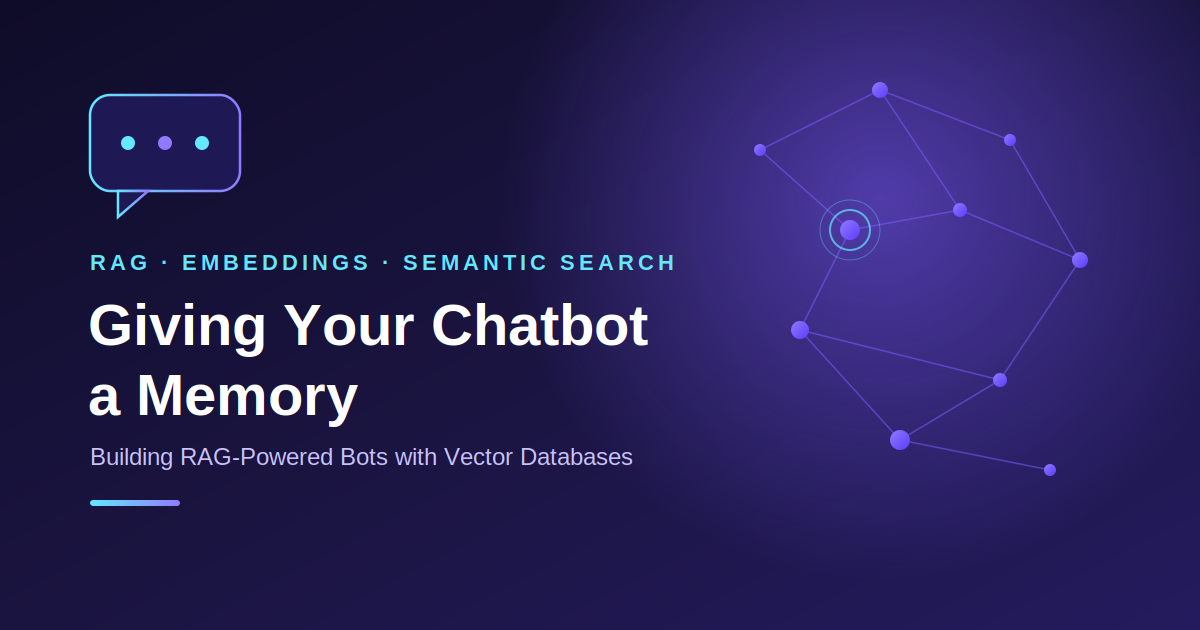
A practical, code-first walkthrough of retrieval-augmented generation — from chunking documents to powering real chatbot answers.
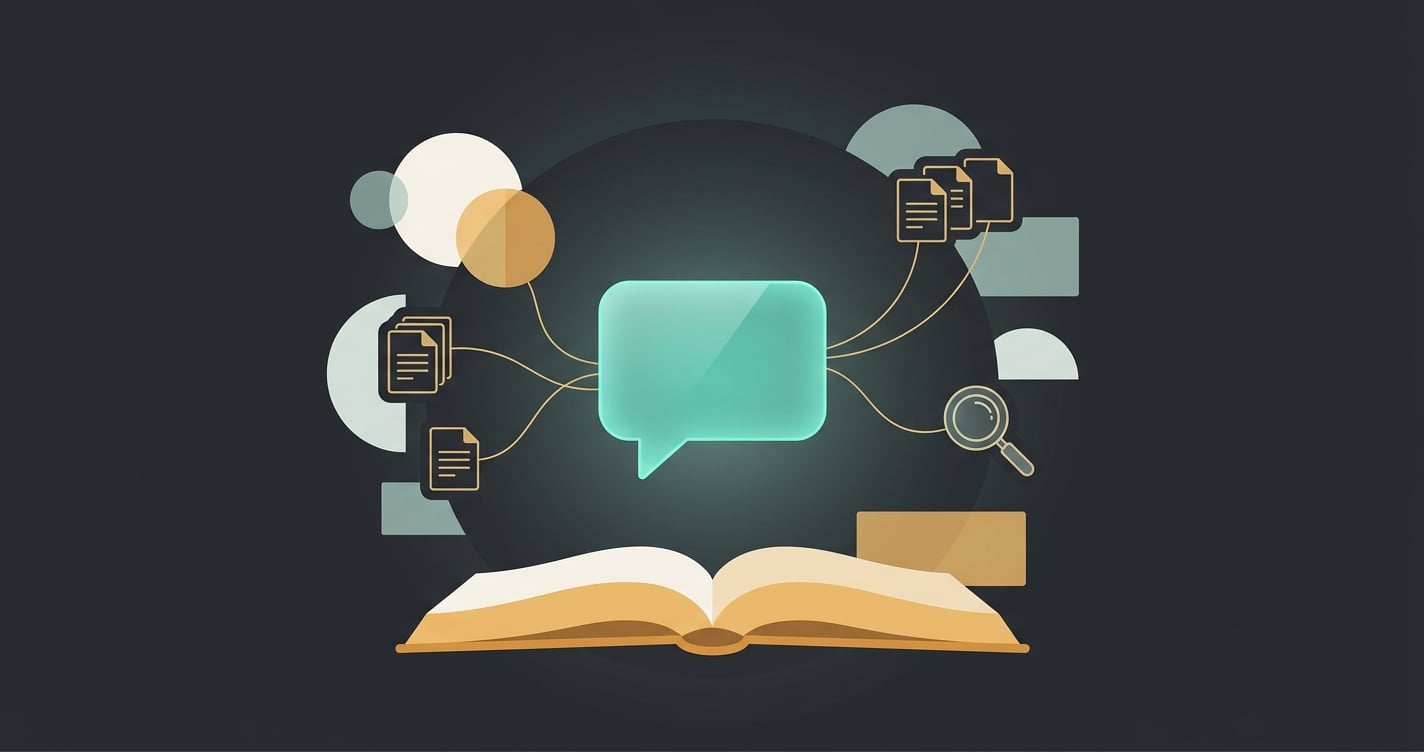
A hands-on guide to embeddings, semantic search, and Retrieval-Augmented Generation — with a full Node.js + Pinecone chatbot example
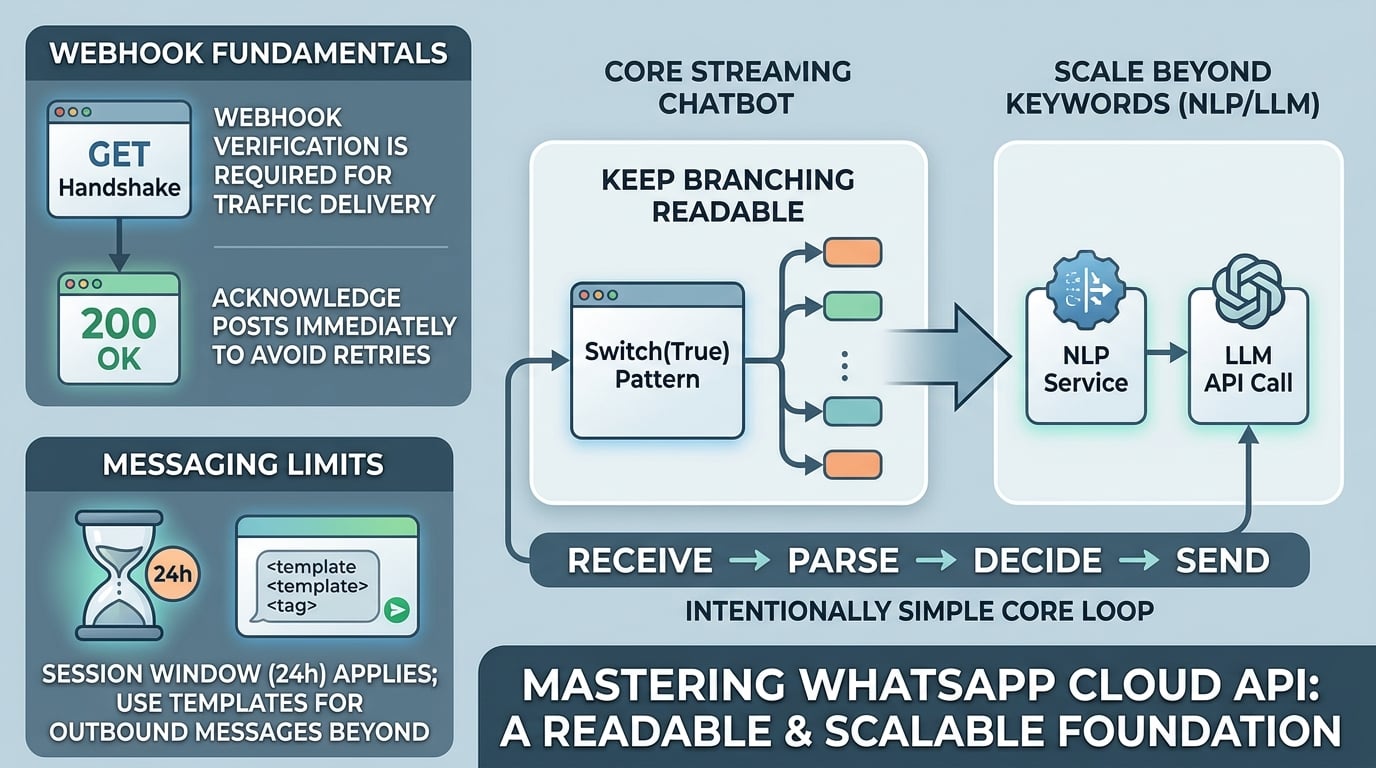
A practical walkthrough for setting up webhooks, verifying tokens, and sending real-time replies using Node.js and the Graph API.
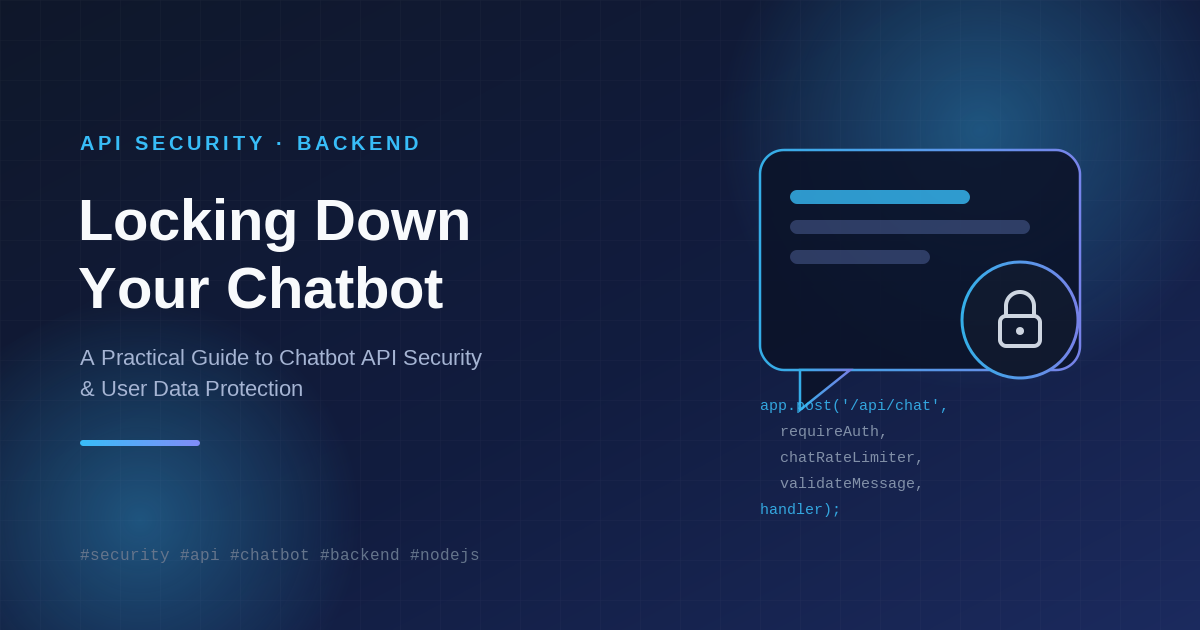
A practical walkthrough of authentication, rate limiting, input validation, encryption, and data minimization with working Node.js and Express code you can adapt for your own chatbot API.
A hands-on Node.js tutorial on intent classification and entity extraction no black-box APIs, just code you can read line by line.

Every chatbot, from a customer-support widget to a voice assistant, has to answer one question before it can do anything useful: "What does the user actually want?" That's intent detection the process

Auto-reply, moderate, and escalate all in one bot

This article assumes familiarity with basic RAG concepts (embeddings, vector search, prompt construction) and general comfort reading Python-like pseudocode. No specific framework knowledge is required — the concepts apply whether you're using LangChain, LlamaIndex, a custom stack, or raw API calls.
